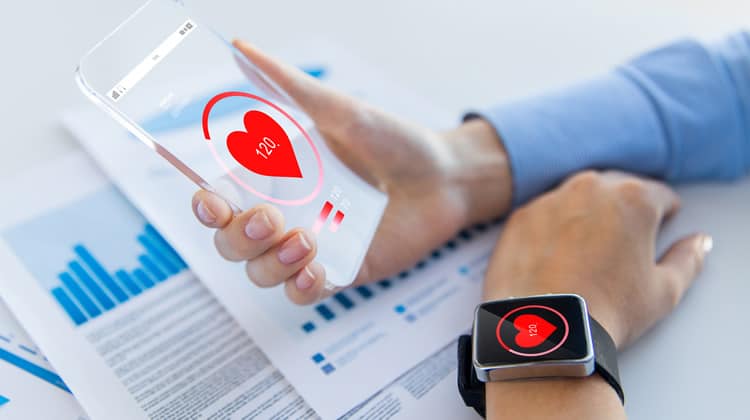
Technology has grown to be an integral part of modern life, from how we communicate to how we work, shop, and entertain ourselves. There are some changes that are more noticeable, such as on our wrists, fingers, and even on our clothing. Wearable technology is no longer just a useful gadget, but a useful tool to optimize health, fitness, productivity, and day-to-day life.
Smartwatches, fitness trackers, smart rings and other wearable devices have the ability to gather data all day long and translate it into helpful information. People can now have a better understanding of their daily activity and habits rather than just depending on taking occasional measurements or on their memory. This shift is influencing people’s attitudes towards personal well-being and daily choices.
What Is Wearable Technology?
Wearable technology, electronic devices that can be worn on the body. These devices are frequently fitted with sensors capable of gathering data on movement, activity, sleep and other daily functions.
This is especially common with smartwatches and fitness trackers. Depending on the device, they can track steps, workouts, heart rate, sleep patterns, calories, and other measurements. Other wearables also offer notifications, navigation, contactless payments, music controls and communication capabilities.
The most important benefit is the convenience. Instead of having a separate device for every function, users will be able to get useful information directly from a device that one wears.
Improving Health Tracking Accessibility
The biggest impact wearable technology is having on the daily lives is the ability to keep track of personal health data.
Wearable technology allows users to monitor their physical activity, resting heart rate, sleep hours and other fitness metrics. Having this information on a regular basis can lead people to be more aware of their habits.
For instance, if they find themselves walking less on busy work days, they may schedule brief walks throughout the day. A person may also observe that they have an irregular sleep pattern and start establishing a more predictable sleep schedule.
Wearables should not be a replacement for clinical testing or medical advice, but they can help increase awareness of personal habits and wellness.
Transforming Fitness and Exercise
Wearable technology has made an impact on the fitness industry. In previous times, the only means to monitor exercise was to use a simple stopwatch, a notebook, or memory. A single smartwatch today can track a variety of information about the exercise.
Users can track exercises like strength training, walking, swimming, cycling and running. Depending on the device, they can also be provided with data related to workout duration, pace, distance, heart rate and estimated energy expenditure.
This can help make exercise more tangible and interesting. A runner preparing for a race could analyze their training results of previous sessions to gain insights into their progress over time.
Motivation can also be provided by wearables. Goals, reminders, progress charts and achievement badges can keep the user motivated to keep going every day.
Encouraging healthy sleep habits
Wearables are also becoming useful in other areas, such as sleep. Many contemporary devices are able to track the amount of sleep and estimate the various sleep phases.
Consumers should not use the data collected by wearables as a medical diagnosis, but it can help them be aware of patterns.
For instance, a user may find that they are not sleeping as deeply as usual if they are staying up late on a regular basis or that they get up much earlier than usual on the weekends. Identifying these patterns can help promote positive habits.
The larger potential gain is that individuals might be more aware of sleep as an aspect of their lives and not something that just happens at the end of the day.
Making healthy habits part of everyday life
wearable technology doesn’t just have to be for a structured workout. Can affect minor actions all day long.
Reminding people to stand after sitting for a long time may increase activity during a day of sitting work. Activity goals can be used to encourage a person to climb the stairs instead of the elevator and/or to take an evening walk.
These little steps can add up to an active lifestyle if they become a habit
Which is why wearable tech is especially attractive to those who aren’t serious athletes. The technology can help with normal daily activity, and not necessarily involve a specific exercise program.
Customizing the User Experience
The smart wearables are getting more and more customized. Many devices present data collected and organize it into trends, summaries and recommendations instead of just raw numbers.
Activity, recovery, sleep or workout intensity suggestions may be offered to the user. With the passage of time, the device can develop a more personalized profile of the user’s habits.
Customisation is useful, as technology has different users with different objectives. Sometimes an office worker is interested in how much movement and sleep they have, and for a competitive athlete, they might want to receive more specific details about the training.
The challenge is ensuring that users also know what the data is telling them, and not getting too caught up in any one of the metrics.
Use wearable technology in everyday productivity
Wearable technology isn’t all about health and fitness. Smartwatches and other such devices are also transforming how people work day in day out.
Notifications can be shown directly on a wrist, so that users can check their message, reminders, appointments and calls without having to constantly check their cell phone.
This can be helpful for anyone that’s working, exercising, commuting or just looking to cut down on phone usage. Users can determine if a notification needs to be addressed immediately, rather than using a phone.
This can allow for a more functional relationship with technology to some individuals.
Increased role of data and privacy
The rise in sophistication of wearable tech means data privacy is a growing consideration. There are a lot of personal information that can be gathered by the wearable devices and users should be aware of how this information is stored, processed and shared.
It’s a good idea to read privacy policies, security measures, data sharing, and account options of a wearable before buying it.
Manufacturers should also ensure that user data is secure and transparent in terms of usage. As wearable technology becomes more intertwined with the daily lives and healthcare of users, their levels of trust will grow more crucial.
What the Future May Bring
More personalisation and better sensors, smarter software and more integration with other digital services are likely to come in the future for wearable technology.
Wearables could get better at pattern recognition, and display information in ways that are more easily understood. Personal insights might also be more nuanced and useful with advances in artificial intelligence.
Meanwhile, any wearable technology that is successful will have to be innovative, comfortable, accurate, private, affordable, and easy to use. The computer can gather a tremendous amount of data, but if that data is used to make practical decisions, the value of the device is truly great.
Conclusion
Smart gadgets are transforming more than our approach to fitness. It is changing how people think about their activity, how they organize their activities, their sleep habits, how they communicate, and their perceptions of personal wellness.
It’s possible that none of the features will have the greatest impact. Rather, it is the availability of useful information all day long and the subsequent application of that information to make positive, tiny changes.
With the advancement of wearable devices, they will be more and more a part of daily life. The important thing for consumers will be to use these technologies as useful tools – not as the routine. Wearable tech, if employed properly, can be helpful tools for understanding and managing health and fitness routines and behaviors.