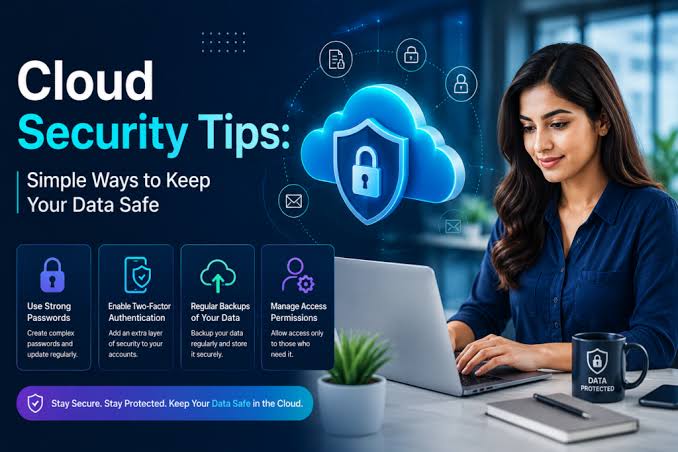
Cloud computing is an indispensable part of business today in the digital era. No matter whether it’s a small startup or a large enterprise, organizations greatly depend on the cloud for various purposes, including storing data, collaborating with others, and running mission-critical apps. The cloud brings unparalleled flexibility, scalability, and cost-effectiveness, but it also presents a host of new security challenges that organizations need to navigate with care. Security in the cloud means a combination of technology, policies, and practices to reduce risks and ensure compliance of sensitive information.
Understanding Cloud Security
Just before you start with effective strategies, it’s important to grasp what cloud security means. Cloud security can be defined as a collection of policies, technologies, and controls used to safeguard data, applications, and infrastructure related to cloud computing. Cloud security is different from conventional on-premises security because it requires protecting data in different types of clouds (public, private, or hybrid) and shared responsibility between the cloud service provider (CSP) and the customer.
Cloud environments are unique, and so are security, which means that it is not just up to the cloud provider to secure them. While CSPs usually provide the infrastructure, organisations have to secure their data, identities and access controls. The shared responsibility model highlights the importance of organizations being aware of their role in security and taking the necessary steps.
Main Challenges of Cloud Security
- Data Breaches and Data Loss: Data that is stored in the cloud is very easy to get to for cybercriminals. Data can be vulnerable to unauthorized access due to misconfigured settings, insufficient access controls, or application vulnerabilities.
- Identity and Access Management (IAM): The management of user identities and permissions on various cloud services may be complex. Poor IAM practices may result in unauthorized access and/or privilege escalation.
- Compliance and Regulatory Requirements: There are different regulations concerning data privacy and security in various industries, including GDPR, HIPAA, or PCI DSS. Ensuring compliance in a dynamic cloud environment can be challenging.
- Insider Threats: Cloud access by employees or third parties could be unintentional or intentional breaches of security.
- Unsecure APIs and Interfaces: Cloud services frequently depend on APIs to integrate. These interfaces can be vulnerable and attacked.
Strategies for Effective Cloud Security
Do in-depth Risk assessments
Conduct a thorough risk assessment to determine which data and applications are most important and fragile. Know where sensitive data is stored and assess the consequences of a breach. This evaluation will help you inform your security needs and effectively allocate resources.
Adopt Strong Identity and Access Management (IAM)
IAM is the cornerstone of cloud security. Use multi-factor authentication (MFA) to provide additional security beyond the password. Apply the principle of least privilege; give users just enough privileges to do their jobs. Regularly review access rights and revoke unnecessary permissions.
Implement IAM solutions that enable Single Sign-On (SSO) and centralized user management to help simplify access control across cloud platforms.
Encrypt Data at Rest and in Transit
Data encryption is crucial to ensure data security and privacy. Employ strong data in-transit (e.g., TLS) and at-rest encryption. Look for built-in encryption features that are offered by many cloud providers; be sure to use and configure these.
An additional layer of security can be provided with a Key Management Service (KMS) for managing your encryption keys. This way you will have more control over the cryptographic keys used, and therefore improve your security posture.
Regularly Audit and Monitor Cloud Environments
With continuous monitoring, suspicious activities can be identified early on. Implement logging and auditing tools that can track user actions, API calls, and system changes. Analyze logs and look for anomalies in Security Information and Event Management (SIEM) systems.
Configure alerts for unusual access or permission changes. Compliance with regulatory standards and internal policies is also guaranteed by regular audits.
Follow a multiple layer approach to security
Multiple security controls that provide security for various parts of your cloud environment: layered security or defense-in-depth. This could involve WAFs, endpoint security, intrusion detection/prevention systems (IDS/IPS) and firewalls.
To get a centralized view and manage, use cloud-native security products offered by your CSP like AWS Security Hub, Azure Security Center, or Google Cloud Security Command Center.
Secure APIs and Integrations
While APIs are essential to cloud operations, they can be vulnerable if they are not adequately protected. Secure coding, API gateways, and authentication and authorization for all API calls. Test APIs regularly for vulnerabilities and patch them in a timely manner.
Develop Incident Response and Disaster Recovery Plans
Even with the best of intentions, there are still times that things can go wrong. Develop an incident response plan with containment, eradication and recovery actions. Ensure that staff is trained to react quickly and effectively.
Test disaster recovery solutions regularly to ensure data can be quickly recovered and services restored with minimal downtime.
Teach your staff and train your employees
Human error is still a top reason for security breaches. Regular staff training sessions to educate staff on security best practice and phishing dangers, and on the importance of having strong passwords. Encourage a security mindset and make everyone responsible for protecting data.
Choose Reputable Cloud Service Providers
Choose CSPs that have a history of security and compliance. Check their security certifications, data protection policies and transparency reports. Define Service Level Agreements (SLAs) that clearly define the responsibilities and expectations of security.
Keep informed about emerging threats and best practices
The cybersecurity industry is a constantly evolving one. Keep up with the newest threats, vulnerabilities and security technologies. Join industry forums, attend industry conferences, and follow security updates from your CSP and cybersecurity groups.
Conclusion
There’s a lot to know about cloud security, and it takes a multi-layered, proactive strategy to navigate it. Cloud providers have strong infrastructure security, but the responsibility of securing data and applications falls on the shoulders of the organizations. Through proper risk assessments, robust identity controls, encryption of sensitive data, periodic surveillance of environments, and a culture of security, organizations can minimize their risk.
Securing cloud applications is an active effort, not a single event, and will continually change in reaction to new threats and technology. In this fast-paced digital world, adopting best practices and staying vigilant will ensure that your organization keeps its data secure and retains customer and partner trust.